Skip to content
Dose of Proof
Autonomic / Nervous system output

Vagal Tone AssessmentWhat it can prove.

Symptoms get louder when the parasympathetic brake is weak. Tracking vagal tone makes recovery more objective.
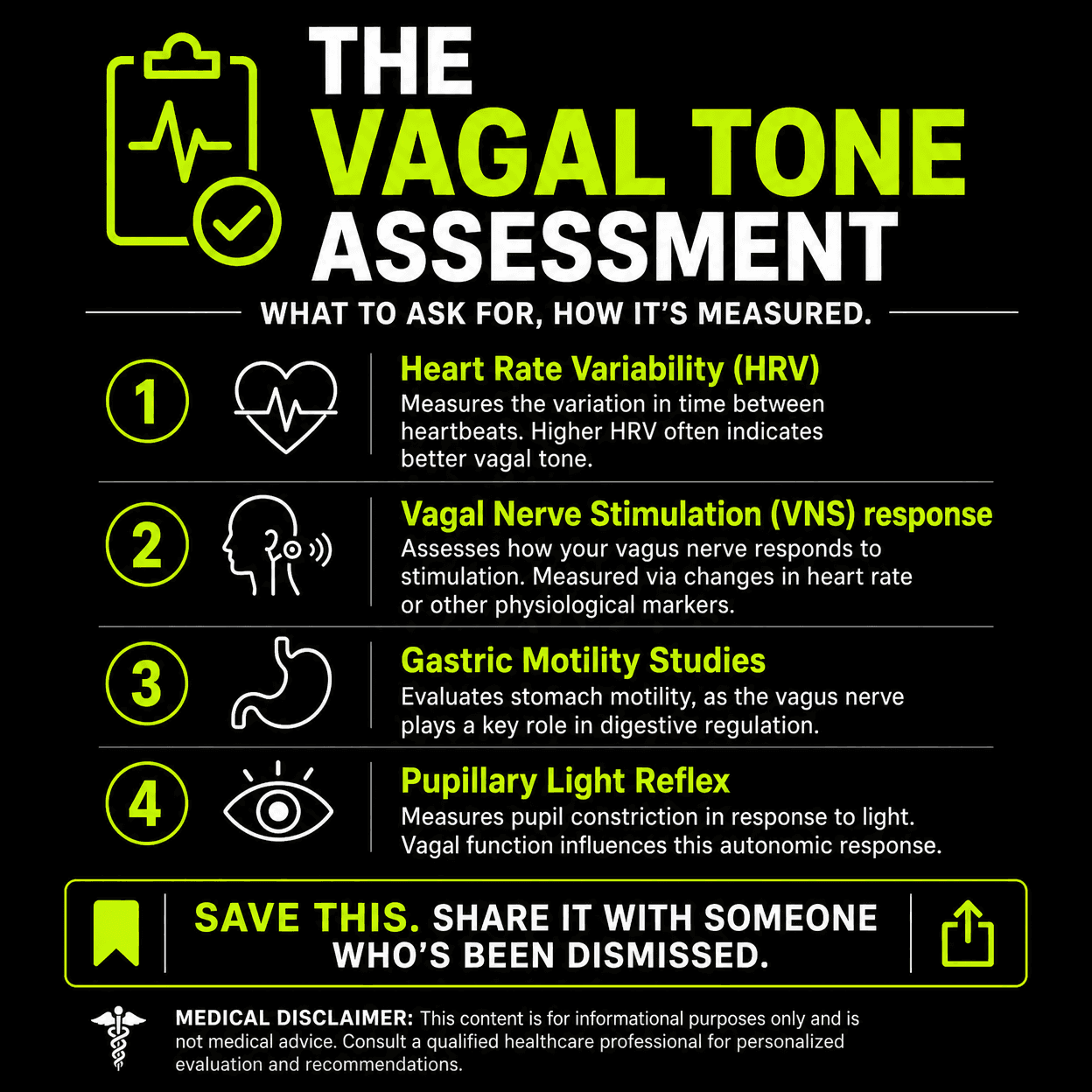
Vagal Tone Assessment testing visual

What This Test Measures

Vagal Tone Assessment evaluates the functional output of your parasympathetic nervous system (the "rest and digest" branch). The vagus nerve supplies the heart, lungs, and digestive tract, acting as a buffer against inflammatory signaling.

This assessment checks:

  • HRV (Heart Rate Variability): The micro-variation in time intervals between consecutive heartbeats.
  • rMSSD (Root Mean Square of Successive Differences): The primary HRV metric that reflects parasympathetic (vagal) activation.
  • Pupillary Light Reflex: The speed and latency of pupil constriction, controlled by autonomic pathways.
  • Heart Rate Recovery (HRR): How quickly your heart rate drops in the first 2 minutes after physical exertion.

Why Doctors Skip It

Conventional medicine only tests vagus nerve pathology in cases of severe gastroparesis or syncope (fainting) using invasive tilt-table tests. They do not look at sub-clinical suppression of vagal tone as a contributor to chronic fatigue, mast cell activation, or gut motility bottlenecks.

Optimal Ranges (with citations)

| Metric | Sub-Optimal | Functional Optimal | Citation | |---|---|---|---| | HRV (rMSSD) | < 25 ms | > 55 ms (Age dependent) | Frontiers in Public Health, 2017 | | Pupil Constriction | Latency > 0.5s | Latency < 0.3s | Clinical Autonomic Research, 2018 | | Heart Rate Recovery | < 12 bpm (in 1 min) | > 18 - 25 bpm (in 1 min) | The New England Journal of Medicine, 1999 |

How to Order

  • Self-Tracking Tools: Oura Ring, Whoop 4.0, Apple Watch (using specialized apps like HRV4Training).
  • Clinical Testing: Autonomic nervous system testing (ANS testing) in a functional neurology clinic.
  • Cost: $150 - $350 for consumer wearables.

What Results Mean for Your Protocol

  • Suppressed HRV (< 25 ms): Limit intensive training or toxic exposures. Prioritize passive vagus stimulation (such as microcurrent stimulation, gargling, and slow resonance breathing).
  • High HRV (> 60 ms): Your system is resilient. Good window to introduce physical exercise, detox binders, or active neck rehabilitation.
  • Chronic Drop in HRV after NUCCA adjustments: Alignment may be unstable or the correction was too aggressive. Discuss adjusting coordinates with your doctor.

My Personal Result + Interpretation

During my most symptomatic phase, my night-time HRV averaged 14 ms, confirming that my autonomic system was stuck in a high-stress, fight-or-flight pattern. As my upper neck alignment stabilized and mold was cleared, my baseline HRV increased to 48 ms, coinciding with a significant improvement in digestion and food tolerance.


Affiliate Links & Tools

Frequently Asked Questions

What is vagal tone?+
Vagal tone refers to the activity of the vagus nerve, which serves as the primary pathway of the parasympathetic nervous system, helping slow heart rate and lower inflammation.
How is vagal tone measured?+
Vagal tone is measured indirectly using Heart Rate Variability (HRV)—specifically the rMSSD metric—and by tracking heart rate recovery after exercise.
Why is high HRV better?+
High HRV indicates that your autonomic nervous system is flexible and balanced, allowing you to transition easily between stress states and recovery states.
Can neck misalignment reduce vagal tone?+
Yes. The vagus nerve exits the skull base and travels directly past the C1-C2 vertebrae. Mechanical compression or alignment friction here directly suppresses vagal output.
What is a normal HRV range?+
HRV is highly individual and depends on age, fitness, and health status. Tracking your personal baseline and weekly trend is far more valuable than comparing with others.
Next Test in Sequence

hEDS and Hypermobility Screen

Check whether ligament laxity is part of the structural story. Stabilizing the body requires systematic sequencing. Once you have mapping for Vagal Tone, look here next.

Map next step: Hypermobility

Related Tests

Medical Disclaimer: This website documents my personal recovery journey. I am not a medical doctor. The details, protocols, and guides shared here are not medical advice and are not intended to diagnose, treat, or prevent any illness. Always consult a qualified physician.