Mold / Environmental load
Mycotoxin Urine TestWhat it can prove.
This is the test that moves mold from a vague suspicion into something you can track, retest, and discuss with a qualified clinician.
This is the test that moves mold from a vague suspicion into something you can track, retest, and discuss with a qualified clinician.
The urinary mycotoxins test measures the excretion of secondary metabolites produced by toxic indoor molds. Unlike mold spores, which are filtered by mucous membranes, mycotoxins are microscopic chemical compounds that pass easily into your blood and accumulate in fatty tissues, including the brain and nervous system.
This test checks for:
Conventional medicine is trained to recognize acute mold poisoning (mycotoxicosis) or acute mold allergy (IgE mediated). It does not recognize chronic, low-level biotoxin accumulation from water-damaged buildings as a valid cause of systemic autonomic or mast cell activation.
Standard practitioners will run basic blood work, which will look completely normal because mycotoxins do not affect red blood cell count or basic liver/kidney enzymes until severe tissue damage occurs.
| Mycotoxin | Conventional Range | Functional Optimal | Citation | |---|---|---|---| | Ochratoxin A | < 7.5 ppb | 0.0 - 1.5 ppb | Journal of Toxicology, 2013 | | Trichothecenes | < 0.18 ppb | ND (Not Detected) | Clinical Microbiology Reviews, 2003 | | Mycophenolic Acid | < 15.0 ppb | < 2.0 ppb | Alternative Therapies in Health, 2018 |
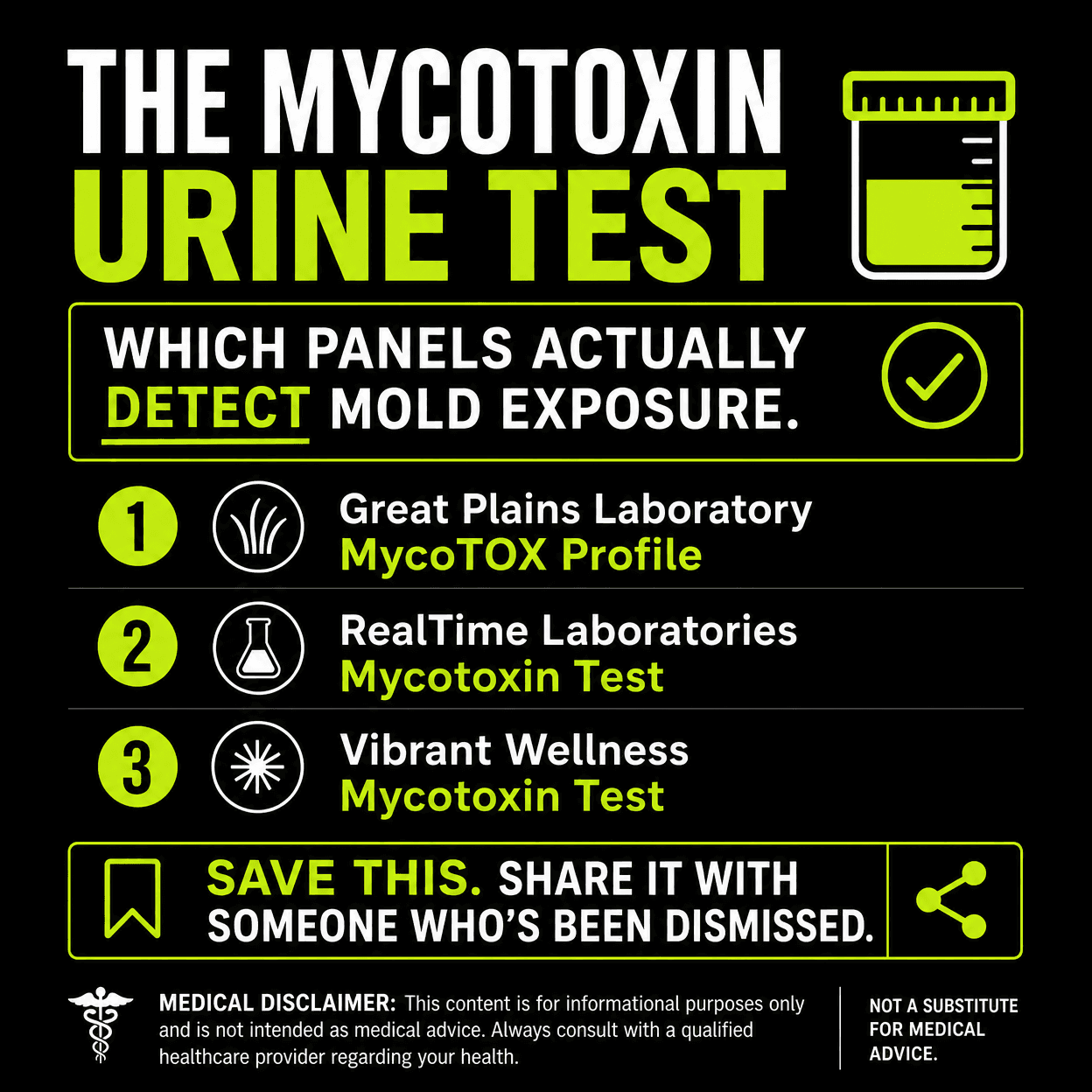
You can order this test directly online without insurance approval via functional diagnostics partners:
My initial test showed Ochratoxin A at 28.4 ppb (nearly 4x the conventional limit) and Satratoxin G (Trichothecene) at 1.2 ppb. This was the definitive proof that my physical symptoms weren't psychosomatic. The environmental biotoxins were directly activating my mast cells and destabilizing my autonomic nervous system.
After 6 months of environmental remediation and sequenced binding, my Ochratoxin A dropped to 3.2 ppb, aligning with significant recovery in my brain fog and heart rate stability.
Map inflammatory signaling instead of guessing from symptoms. Stabilizing the body requires systematic sequencing. Once you have mapping for Mycotoxins, look here next.
Map next step: CIRS Panel →Medical Disclaimer: This website documents my personal recovery journey. I am not a medical doctor. The details, protocols, and guides shared here are not medical advice and are not intended to diagnose, treat, or prevent any illness. Always consult a qualified physician.