What Doctors Miss When Basic Labs Are Normal: The Testing Roadmap
How many times have you heard: "Your blood work is perfect. You are completely healthy"?
For the chronic illness patient, these words are a form of medical gaslighting. Your joints burn, your brain feels inflamed, your gut is reactively allergic to every food, but the paperwork says you're fine.
Here is the truth: conventional medicine is built to diagnose acute pathology, not chronic sub-clinical burden. If you want real answers, you have to look where standard practitioners refuse to search.
The Standard Lab Gap
Standard blood tests check the status of major organs under resting conditions. A basic Metabolic Panel (BMP) or Complete Blood Count (CBC) is excellent at detecting if your kidneys are failing or if you have severe anemia.
However, standard panels do not check:
- Intracellular Status: What is happening inside the cells, rather than in serum.
- Autonomic Signaling: The real-time output of your parasympathetic and sympathetic branches.
- Biotoxin Accumulation: Mold mycotoxins, heavy metals, or chronic stealth infections that reside in fat tissues.
- Upstream Structural Friction: Bone-on-nerve irritation in the upper neck.
The Testing Roadmap
To escape the cycle of vague symptoms, we built a structured diagnostic sequence. Each test corresponds to a specific layer of the biological terrain.
Here is the visual representation of this sequence:
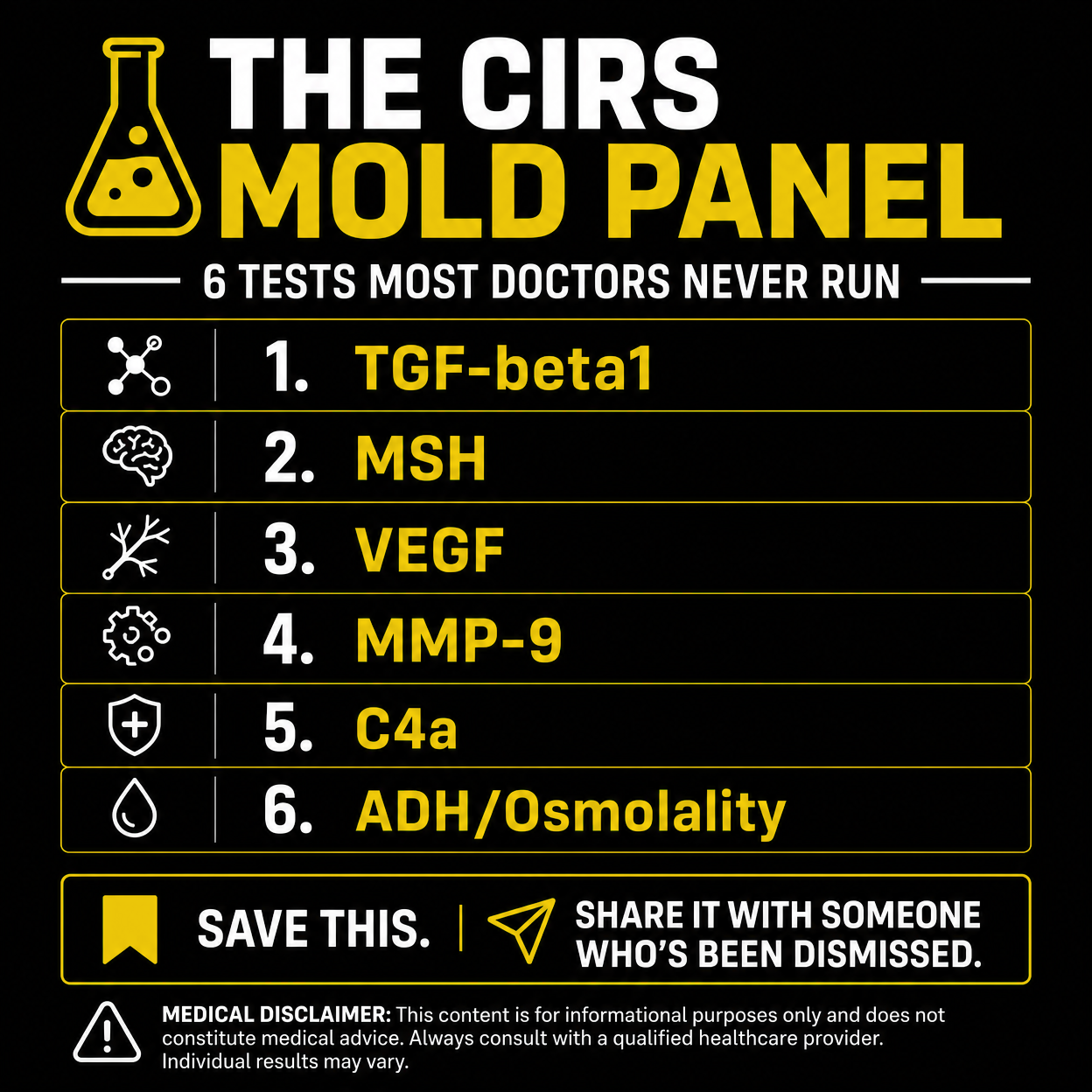
If you are mapping your recovery, these are the three high-leverage testing areas to explore:
1. The Environmental & Biotoxin Layer
This looks at what is entering your system and whether your body can clear it.
- Mycotoxin Urine Panel: Detects mold biotoxins. Read details on Mycotoxins Urine Test.
- CIRS Inflammation Panel: Evaluates your immune response via TGF-beta 1 and C4a. Read more on CIRS Panel.
2. The Autonomic & Nervous System Layer
Checks whether your body is stuck in a chronic fight-or-flight loop.
- HRV & Vagal Tone Assessment: Measures your parasympathetic capacity to buffer stress. Read more on Vagal Tone Assessment.
- Upright Cervical Imaging: Checks structure. See Cervical Curve Measurement.
3. The Histamine & Mast Cell Layer
Measures your body's reactive load.
- MCAS Panel: Anchors tryptase, histamine, and prostaglandins. Read more on MCAS Panel.
Stop Guessing, Start Proving
If you want the full breakdown of how to order these tests, optimal ranges, and what your results actually mean for your daily protocol, review our complete Testing Roadmap.
Stop letting normal labs gaslight your experience. The proof is out there—you just have to order the right map.
Frequently Asked Questions
Why does standard blood work look normal when I feel sick?+
What are the key markers for Chronic Inflammatory Response Syndrome (CIRS)?+
Can I order these diagnostic tests myself?+
Shop the Protocol
Get the exact functional testing guides and protocols I use to maintain remission. For any intervention, work with a licensed telehealth clinician.
Medical Disclaimer
This website documents my personal experience. I am not a doctor. The information shared here is not medical advice and is not intended to diagnose, treat, cure, or prevent any disease. Always consult your physician before starting any new treatment.