The Mold Toxicity
Recovery Protocol
An evidence-first blueprint to finding hidden environmental loads, mapping biotoxin inflammation, and staging your excretion pathways.
Guide Sections
1. Understanding Biotoxin Illness (CIRS)
Biotoxin illness is not an allergy. Standard allergists look for IgE-mediated histamine releases that cause sneezing, runny eyes, or hives. But when mold mycotoxins enter a water-damaged building, they release microscopic chemical poisons that accumulate in lipid tissues.
For about 25% of the population, genetic markers (HLA-DR genes) prevent the immune system from identifying and tagging these compounds. As a result, the toxins circulate indefinitely, initiating a cascade of systemic inflammation known as **Chronic Inflammatory Response Syndrome (CIRS)**.
The Common Symptoms of CIRS
- Brain fog and memory loss
- Chronic fatigue and muscle fatigue
- Static shocks and neurological tingling
- Food sensitivities and gut motility drops
2. Mapping the Load: Mycotoxins vs. CIRS Markers
Getting well requires data. You cannot guess your way out of a biotoxin load. We divide our testing strategy into two primary categories: measuring actual toxin excretion and measuring the biological damage (inflammatory signaling).
Urinary Mycotoxin Assays
Measures the absolute presence of mold toxins like Ochratoxin A, Mycophenolic Acid, and Trichothecenes leaving your body.
Read Mycotoxins Guide →CIRS Blood Panels
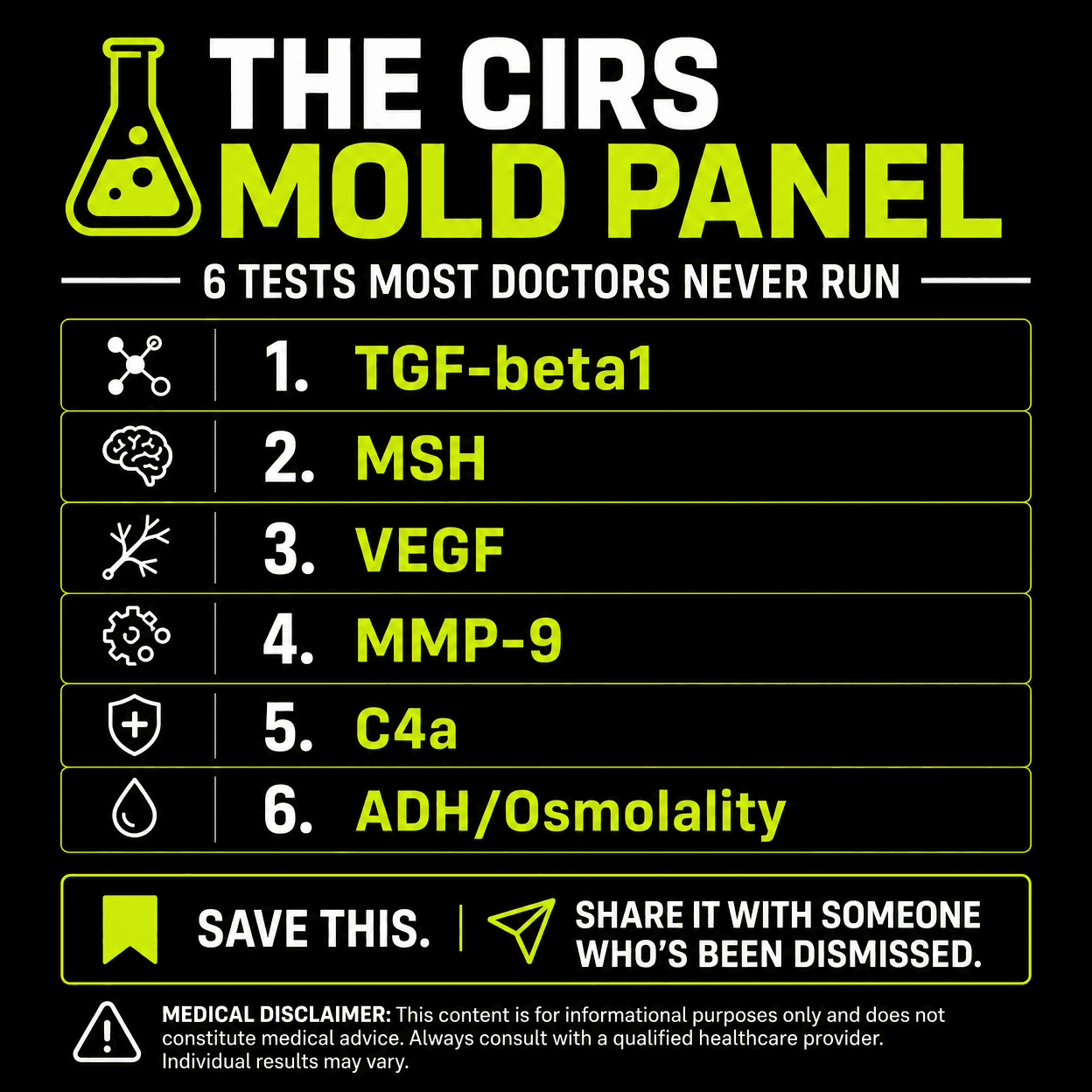
Measures immune signaling, inflammation, and barrier permeability markers like TGF-Beta 1, C4a, and MMP-9.
Read CIRS Markers Guide →3. Staging the Detox: The 4-Phase Protocol
The biggest mistake patients make is introducing heavy binders on day one. If your drainage pathways are closed, the toxins mobilized by binders will recirculate in your blood, overloading your kidneys, liver, and skin.
Diagnostic Breakthroughs
Escaping conventional gaslighting with functional diagnostics.
Symptom Load
- •Ochratoxin at 28.4 ppb
- •C1-C2 left translation (3.5mm)
- •Reversed cervical curve (-4 degrees)
Active Protocol
- •Mycotoxin Urine Panel
- •CIRS Blood Markers
- •Upright X-Ray & TyTron scans
Phase 1: Drainage
Support liver filtration, biliary flow, and kidney output using dandelion root, milk thistle, and mineral buffers.
Phase 2: Binding
Introduce binders matched to your urinary test. Ochratoxin A requires activated charcoal; Trichothecenes respond to Zeolite and modified citrus pectin.
Phase 3: Biofilm Cleansing
Disrupt protective biofilms in the gut and sinuses, allowing antifungals to access hidden fungal colonization.
Phase 4: Cellular Rebuild
Replenish cell membrane lipids with high-dose phosphatidylcholine and support mitochondrial energy production.
4. Nutrient Stacking & The Low-Histamine Shield
Mold toxins block your body's natural parasympathetic brake, which often leads to severe mast cell activation (MCAS). During active detox, eating a diet low in mold and histamines reduces the baseline inflammatory load.
| Foods to Avoid (High Mold/Histamine) | Foods to Prioritize (Low Mold/Histamine) |
|---|---|
| Leftovers, aged meats, and cheeses | Freshly cooked grass-fed meats |
| Grains, peanuts, and dried fruits | Fresh low-histamine vegetables |
| Fermented foods and alcohol | Pure filtered water and mineral electrolytes |
5. Fixing the Environment: ERMI & Remediation
You cannot detoxify in a moldy environment. Clean air is the foundation of recovery. Standard home mold inspections look for visible damage, but hidden mold in crawlspaces or behind drywall requires advanced testing.
An **ERMI (Environmental Relative Moldiness Index)** dust test uses PCR technology to identify key water-damaged indicator molds. If your ERMI score is high, specialized remediation (dry ice blasting, structural sealing, and HEPA air scrubbing) must be completed.
Want the Complete Mold detox Guide?
Step-by-step instructions on binding, testing, home remediation, and restoring your cellular health.