The Hidden Mold Timeline: 4 Years, 3 Doctors, 1 ER Visit
In This Article
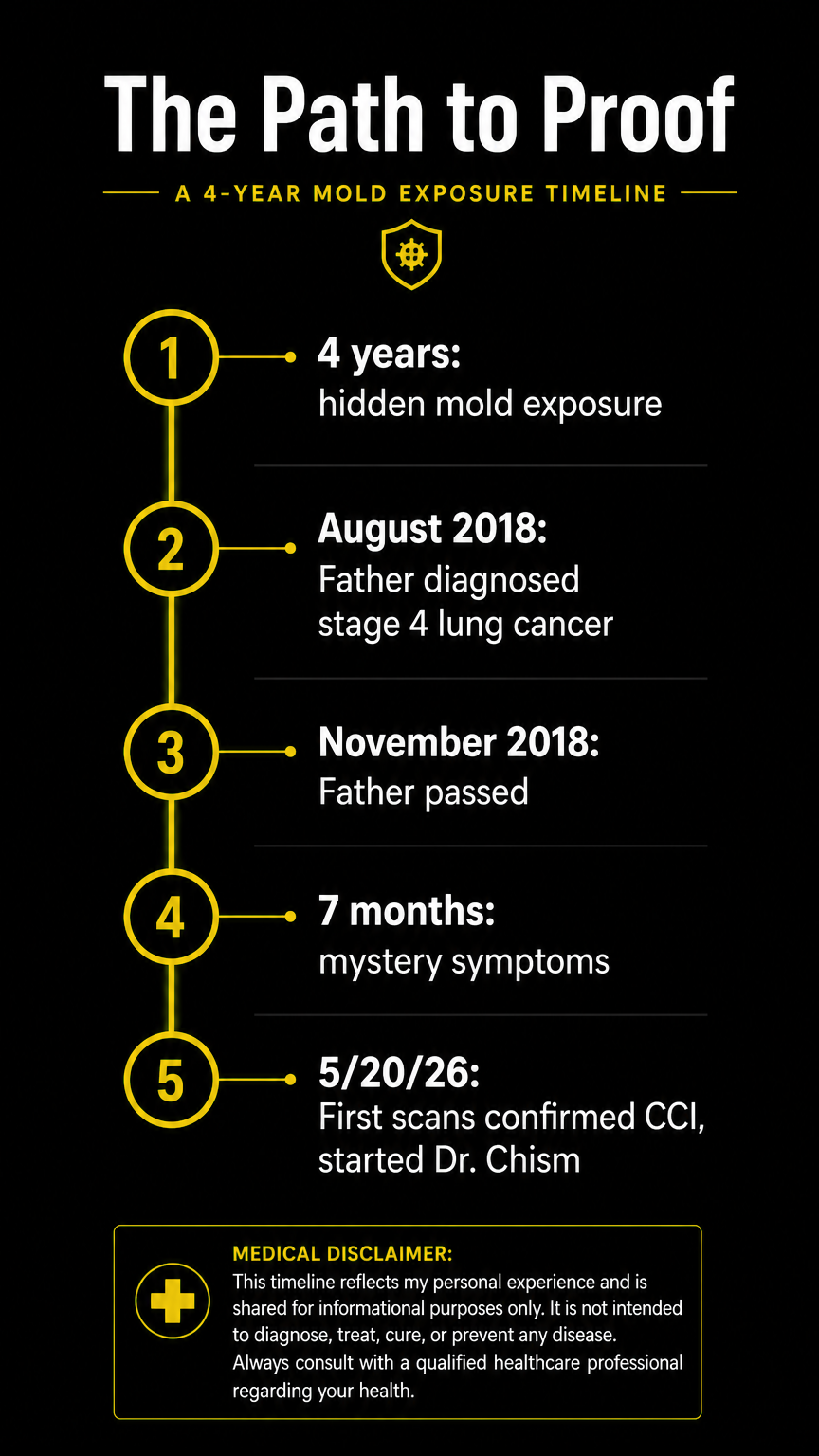
For four years, I lived in a house with hidden water damage. During this exact window, my father was diagnosed with Stage 4 lung cancer. We both breathing in the same toxic air, but our bodies responded differently.
This is the timeline of how environmental toxicity overlapped with structural mechanical failure to create a perfect storm of systemic illness.
The Overlapping Timeline
Environmental load rarely acts alone. In my case, hidden mold exposure combined with pre-existing ligament laxity (hEDS context) and upper cervical C1-C2 misalignment to trigger Chronic Inflammatory Response Syndrome (CIRS).
Here is the visual timeline of those four years:
Phase 1: The Vague Symptom Onset (Years 1-2)
In the beginning, the symptoms were subtle. Mild brain fog, morning fatigue, and occasional muscle twitching. Like most people, I blamed it on stress, poor sleep, or working too hard.
I went to my primary care physician. Basic labs (CBC, metabolic panel, thyroid) were completely normal. "You're fine," they said. "Take some magnesium and reduce stress."
Phase 2: Autonomic Breakdown & The ER Visit (Year 3)
By year three, the load was too high. The hidden mold in the crawlspace was constantly releasing mycotoxins into the HVAC system. My body's detox pathways became completely congested.
One evening, my heart rate spiked to 160 bpm while sitting on the couch. My face began burning, my vision blurred, and panic took over. I ended up in the ER.
The ER doctors ran an EKG, chest X-ray, and basic blood work. The diagnosis? "Panic attack." But I knew my nervous system was misfiring.
Phase 3: Finding the Root Cause (Year 4)
After the ER visit, I stopped looking for answers in conventional clinics. I ordered a Urine Mycotoxins Test and an ERMI dust test for my home.
The results were clear:
- Mycotoxins: Extreme elevation of Ochratoxin A and Mycophenolic Acid.
- ERMI: A score of 18.2 (anything above 2 is high-risk for biotoxin illness).
The mold had broken my autonomic nervous system's ability to maintain calm. The vagus nerve, already irritated by C1-C2 instability, could no longer buffer the toxic load.
The Recovery Protocol
Clearing mold is a sequence, not a stack. If you take binders without opening drainage pathways, you reabsorb the toxins and crash.
My successful detox sequence followed these four steps:
- Open Drainage: Supporting the liver, kidneys, and lymph flow before introducing any binders.
- Phase Binders: Tailored binders (Activated Charcoal, Bentonite Clay, and Zeolite) matched to the specific mycotoxins shown on my lab reports.
- Disrupt Biofilms: Using natural biofilm busters to expose hidden mycotoxins.
- Cellular Repair: Replenishing lipid layers with Phosphatidylcholine and supporting mitochondria with NAD+.
If you are treating chronic symptoms and making no progress, look at your environment. The air you breathe is the foundation of your recovery.
Frequently Asked Questions
How long does it take to recover from mold exposure?+
What binders work best for clearing mycotoxins?+
Why do standard doctors miss mold illness?+
Shop the Protocol
Get the exact functional testing guides and protocols I use to maintain remission. For any intervention, work with a licensed telehealth clinician.
Medical Disclaimer
This website documents my personal experience. I am not a doctor. The information shared here is not medical advice and is not intended to diagnose, treat, cure, or prevent any disease. Always consult your physician before starting any new treatment.